Explore our certified coagulants and flocculant polymers designed for high-performance industrial and municipal filtration lines.
Understanding the safety profile of Aluminum Chlorohydrate requires examining both its chemical structure and its behavior in solution. Formulated as Al2(OH)5Cl·2H2O, ACH consists of complex, highly charged polynuclear aluminum complexes, primarily the Al13 Keggin structure ([Al13O4(OH)24(H2O)12]7+) and the larger Al30 complex. This high charge density gives ACH a basicity of up to 83%, compared to standard polyaluminum chloride (PAC) which typically caps at 65%.
In water treatment, ACH works through charge neutralization and sweep flocculation. Once added to raw water, the polynuclear aluminum complexes rapidly react with suspended colloidal particles, precipitating out of solution as insoluble aluminum hydroxide complexes. Toxicological evaluations show that when water treatment processes are operated correctly, residual monomeric aluminum remains below 0.05 mg/L. This level is well within the standards set by the WHO and the US EPA, making treated drinking water safe for public consumption.
For cosmetic applications—principally antiperspirants—the safety of ACH has been heavily researched. The European Union's Scientific Committee on Consumer Safety (SCCS) reviewed the safety of aluminum in cosmetic products in 2020 and 2022. The SCCS concluded that Aluminum Chlorohydrate is safe for use in antiperspirants at concentrations up to 6.25% in aerosol sprays and 10.6% in non-spray formulations. Systemic absorption of aluminum through dermal contact is extremely low (approximately 0.012%), meaning it does not pose a systemic health risk or link to neurodegenerative diseases or oncological conditions.
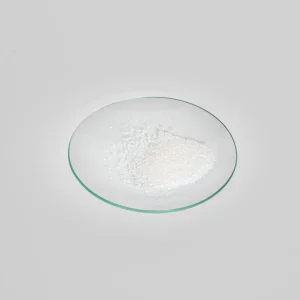
The global ACH market is expanding due to growing urban populations and stricter wastewater discharge rules in North America, Europe, and Asia-Pacific. As a high-performance inorganic polymer, ACH is replacing traditional coagulants like aluminum sulfate (alum) and ferric chloride. Although ACH has a higher upfront cost per ton, its high aluminum oxide content (23% Al2O3 in liquid form, 46% in solid form) means less chemical volume is needed, saving on shipping, storage, and handling costs.
In terms of supply chain dynamics, China leads global production capacity. Heavy chemical manufacturers in eastern industrial centers like Wuxi leverage local raw materials and advanced synthesis technologies. This allows them to supply high-purity ACH that meets NSF/ANSI Standard 60 requirements for drinking water.
At the same time, regional demand is shifting. North American municipal water plants are upgrading to high-basicity coagulants to minimize post-treatment pH adjustment. In Asia-Pacific, rapid industrialization is driving demand for ACH in high-speed paper manufacturing and electronic component manufacturing, where water must be ultra-pure.
The coagulant sector is focusing on green chemistry and lowering its carbon footprint. Standard ACH production requires reacting high-purity alumina or aluminum hydroxide with hydrochloric acid at high temperatures and pressures. Modern factories are adopting waste heat recovery systems and clean-energy reactor lines to reduce carbon emissions per ton of ACH produced.
Another major trend is the development of ultra-low impurity products. High-precision manufacturing processes now remove trace heavy metals (such as arsenic, lead, and cadmium) to levels far below regulatory limits. This high-purity profile is essential for municipal water plants that face strict clean-water standards.
Additionally, combining inorganic coagulants with organic flocculants is gaining traction. Manufacturers are developing customized hybrid formulations, combining ACH with cationic polymers like PDADMAC. These hybrid chemistries speed up floc formation and improve settling velocities, especially in difficult-to-treat wastewater streams.
Years of Technical Expertise
Annual Tons Produced
Tons Storage Capacity
Enterprise Clients Served
Analyzing localized treatment challenges and outlining our long-term molecular innovation roadmap.
High-basicity ACH performs well in low-temperature, low-turbidity waters. It requires up to 50% lower dosage than alum, maintains water pH, and reduces the need for post-treatment lime or caustic soda dosing.
In closed-loop paper mills, ACH acts as a charge neutralizer, retention aid, and pitch controller. It works across a wide pH range, preventing deposits and keeping paper machines running smoothly at high speeds.
In industrial wastewater treatment, ACH effectively precipitates heavy metals and removes phosphates. Its dense, heavy flocs settle quickly, reducing sludge volume and lowering disposal costs.
High-performance coagulation relies on precise control of the aluminum-to-chloride ratio. The molecular basicity of ACH is determined by the formula:
To achieve a basicity of 83%, the synthesis reaction must maintain a high stoichiometric ratio of aluminum to chloride. This is done by dissolving high-purity aluminum hydroxide in hydrochloric acid under high steam pressures (often exceeding 6 bar) in glass-lined or titanium-alloy reactors. Quality control steps must prevent the formation of lower-basicity PAC monomers.
Our manufacturing facility uses digital dosage systems and online spectrophotometric monitoring to check molecular weight distribution in real time. This ensures every batch of ACH has a consistent density of polynuclear Al30 complexes, providing reliable flocculation performance even in changing raw water conditions.
Learn more about Wuxi BS Water Treatment Chemicals Co., Ltd., our 27-year history, and our global capabilities.
The factory was established, focusing on basic inorganic coagulants for local industries.
Renamed as Wuxi Bisheng Water Treatment Agent Co., Ltd. and expanded manufacturing lines.
Began exporting water treatment products globally, building a global distributor network.
Annual sales exceeded 10 million USD, demonstrating strong market growth and solidifying global supply chains.
Established our specialized Foreign Trade Department and introduced digital feeding equipment.
Get answers to common technical and safety questions about wholesale Aluminum Chlorohydrate.
The main difference is their basicity and aluminum oxide (Al2O3) content. ACH has a basicity of up to 83% and contains 23% Al2O3 in liquid form. Standard PAC has a basicity of 50-70% and contains 10-15% Al2O3. ACH's higher basicity means it neutralizes charge more effectively, creates less sludge, and has minimal effect on the pH of treated water.
Yes, ACH is safe when it complies with NSF/ANSI Standard 60. During the coagulation process, the aluminum precipitates out as insoluble aluminum hydroxide, which is removed during sedimentation and filtration. This keeps residual monomeric aluminum levels in the finished water well below drinking water limits.
ACH contains pre-hydrolyzed aluminum complexes. This means it consumes less alkalinity in the water compared to alum or standard PAC. Using ACH minimizes the drop in water pH, reducing or eliminating the need to add neutralizing chemicals like caustic soda or lime, which lowers overall chemical costs.
Liquid ACH should be stored in corrosion-resistant tanks made of fiberglass-reinforced plastic (FRP), HDPE, or rubber-lined steel. Keep storage temperatures between 5°C and 40°C. Avoid exposing liquid ACH to direct sunlight or freezing temperatures, as extreme cold can cause crystallization.
Consistent, high-performance water treatment chemicals shipped directly from our ISO-certified production lines.
Speak with our engineering team to discuss coagulation setups, product selection, or safety certifications.
Wuxi BS Water Treatment Chemicals Co., Ltd. founded 1998.
 BS Water