Explore our core industrial chemistry products designed to maximize solids-liquid separation, reduce sludge volume, and clean municipal sewerage before discharge.
A comprehensive municipal or industrial sewerage and drainage system is far more than an underground network of concrete conduits, gravity channels, and intercepting sewers. While physical pipes are responsible for volume collection and regional routing, they merely act as transport vessels. The operational viability of municipal networks and industrial outflows depends on the chemical purification systems processing the water at the discharge point. Without precise coagulation, flocculation, and decolorization stages, the high volume of suspended solids, organic loads, dissolved surfactants, and colloidal dyes transported through industrial drainage systems would choke ecological basins, leading to strict regulatory fines and infrastructural breakdown.
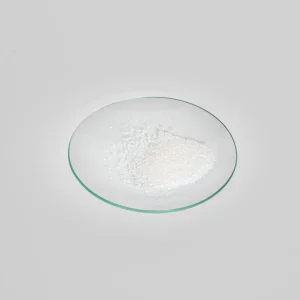
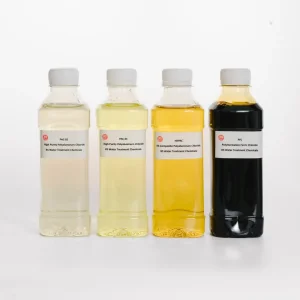
Wastewater runoffs carry diverse electrostatic charges that maintain colloidal stability. Fine clay particles, organic decay matter, and residual dye molecules carry net-negative surface charges, preventing them from coalescing naturally. Through systemic application of polymeric coagulants like Polyaluminium Chloride (PAC) and Aluminum Chlorohydrate (ACH), operators neutralize these electrostatic barriers. This destabilizes suspended solids, forming micro-flocs. When coupled with high-molecular-weight flocculants like Polyacrylamide (PAM), these micro-flocs aggregate into dense, rapidly settling macro-flocs. Consequently, chemical processing determines the ultimate capacity, efficiency, and environmental compliance of modern drainage infrastructures.
| Chemical Class | Standard Basicity Range | Primary Runoff/Drainage Role | Target Pollutants Removal |
|---|---|---|---|
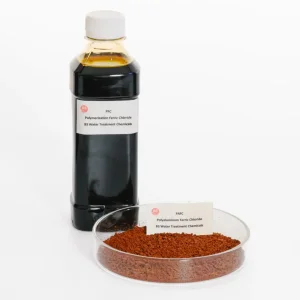
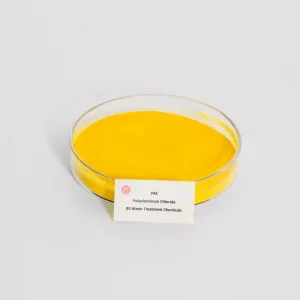
| Polyaluminium Chloride (PAC) | 50% - 85% | Primary electrostatic destabilization & floc nucleation | Heavy metals, organic carbon, high turbidity colloids |
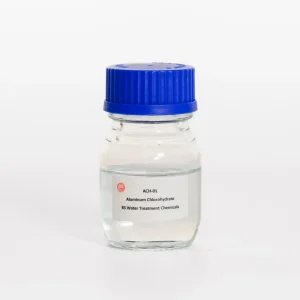
| Aluminum Chlorohydrate (ACH) | 83% - 85% | Concentrated coagulation in space-limited clarifiers | Dissolved phosphorus, fine clay silt, particulate organic matter |
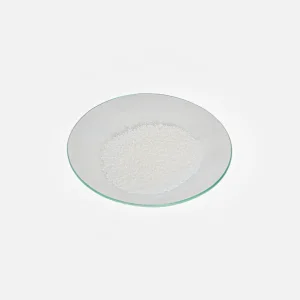
| Polyacrylamide (PAM) | Varies (Anionic/Cationic) | Polymer bridging & micro-floc consolidation | Sludge cake dewatering, industrial colloidal suspension |
| Water Decolorizing Agent (WDA) | Highly Cationic Polymer | Complexation of chromophoric structures | Reactive dyes, acid dyes, dissolved organic carbon (DOC) |
Leveraging continuous chemical research and large-scale industrial manufacturing to secure global municipal supply chains.
Years Industry Experience
Annual Production (Tons)
Finished Goods Storage (Tons)
Global Enterprises Served
Established in 1998, Wuxi BS Water Treatment Chemicals Co., Ltd. has evolved from a regional chemical producer to a global technology leader in water treatment formulations. Our primary production facility coordinates automated synthesis of advanced inorganic coagulants and organic polymeric flocculants. With continuous capacity scaling, our annual sales volume now exceeds 500,000 tons. A permanent inventory reserve of over 20,000 tons of finished products guarantees supply security for municipalities, drainage authorities, and heavy industrial facilities facing peak seasonal runoff or chemical demand spikes.
Securing a stable, cost-effective supply of high-grade coagulation chemistry requires massive raw material access, streamlined power inputs, and robust logistics infrastructure. China's chemical industry clusters offer unparalleled integration. Raw bauxite, high-purity hydrochloric acid, and structural monomers like acrylonitrile and diallyldimethylammonium chloride are sourced within close proximity to our production zones. This spatial clustering eliminates trans-provincial freight variables, reducing intermediate margins and shielding global distributors from volatile material pricing.
Furthermore, our manufacturing site integrates digital SCADA control interfaces with automated reactor units. This integration ensures highly consistent chemical properties across batches, minimizing variations in basicity and molecular weight. Our close proximity to major shipping hubs in East China, such as the Port of Shanghai, enables rapid bulk container dispatch. Consequently, global municipal authorities can maintain tight inventory schedules without risking stockouts of vital water purification chemicals.
Continuous chemical processing lines ensure narrow polydispersity indices for PAM polymers and precise structural polymerization of PAC chains.
A dedicated 20,000-ton warehouse ensures immediate order fulfillment, shielding global buyers from sudden supply shocks.
Seamless intermodal logistics connect our production base directly to international shipping lanes, offering fast transit times to worldwide hubs.
Procuring water chemicals for municipal drainage networks or industrial wastewater treatment requires strict compliance with domestic and international safety standards. Environmental protection agencies enforce zero-tolerance limits on trace heavy metals, unreacted monomers, and residual chemical byproducts in municipal discharges. Wuxi BS operates under strict compliance frameworks, aligning production with ISO 9001 and ISO 14001 guidelines to meet international environmental and safety standards.
Moreover, municipal drinking water projects require low-acrylamide, high-basicity coagulants to protect public health. Our specialized manufacturing lines produce low-impurity formulations that comply with standard testing protocols. For instance, our solid and liquid Polyaluminium Chloride products are refined to keep heavy metal elements, such as arsenic (As) and lead (Pb), well below standard safety thresholds. This rigorous quality control ensures that Wuxi BS products are suitable for demanding drinking water treatment and municipal drainage systems worldwide.
Matching specific chemical formulations with the unique effluent profiles of key global industries.
Accelerating gravity settling in secondary clarifiers. Applying Cationic Polyacrylamide (CPAM) with precise charge densities enhances sludge flocs, speeding up belt-press and centrifuge dewatering. This maximizes throughput while reducing sludge disposal costs.
Separating emulsified oils and dissolved hydrocarbons from drainage runoffs. Utilizing specialized coagulants breaks oily emulsions, allowing free oils to float for skimmer removal, thereby protecting down-stream biological treatment stages.
Removing colloidal silica, organic foulants, and micro-particulates before ultrafiltration (UF) and reverse osmosis (RO) membranes. Proper dosing prevents irreversible membrane fouling, lowering clean-in-place (CIP) cycles and extending membrane life.
Managing pulp drainage and white-water recovery systems. Using dual-polymer retention systems captures fine fibers and fillers, boosting paper sheet formation while reducing the chemical oxygen demand (COD) of discharged process water.
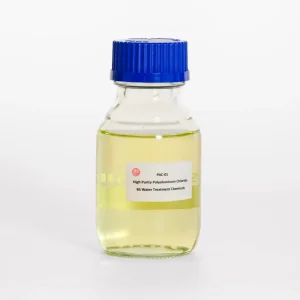
Removing turbidity, organic humic acids, and microscopic pathogens. Our high-purity Polyaluminium Chloride (PAC-01) coagulates raw water without depressing pH levels excessively, maintaining optimal post-filtration water quality.
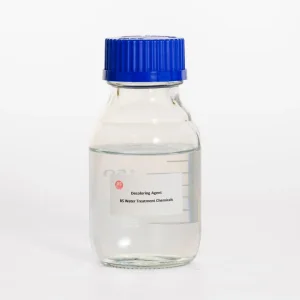
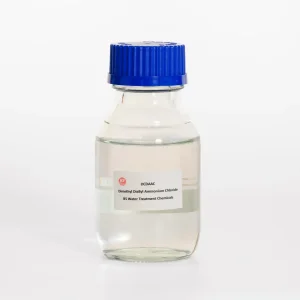
Targeting persistent, highly visible chromophores. Our Cationic Water Decolorizing Agent (WDA) neutralizes and precipitates dissolved dye molecules, transforming colored wastewater into clear, discharge-compliant water.
A history of technological breakthroughs and market expansion, building long-term reliability in water treatment chemistry.
Establishment of our dedicated chemical production facility, focusing on inorganic coagulants for regional municipal water plants.
Re-organized and renamed as Wuxi Bisheng Water Treatment Agent Co., Ltd., upgrading manufacturing facilities to support high-efficiency polymer synthesis.
Began exporting chemical formulations globally through international distribution partners, entering European, Southeast Asian, and North American markets.
Annual export sales exceeded $10 Million USD, demonstrating our growing presence and reliability in the international water treatment market.
Established a dedicated, in-house foreign trade division to streamline communication, technical support, and logistics for direct corporate clients globally.
Modern wastewater management is shifting from simple treatment to resource recovery and environmental footprint reduction. A key focus is reducing total chemical sludge volume. Traditional inorganic metal coagulants, such as alum or ferric sulfate, generate high volumes of chemical sludge that require stabilization and costly landfilling. The industry is increasingly adopting hybrid coagulant-flocculant systems. These systems combine high-basicity Polyaluminium Chloride (PAC) with high-charge cationic polymers, significantly reducing total chemical dosage while maintaining high turbidity removal.
Additionally, real-time dosing automation is transforming wastewater operations. Advanced sensor networks measure influent parameters like turbidity, pH, temperature, and streaming current values in real time. Smart control algorithms then dynamically adjust chemical feed pumps to maintain the optimal dosage. Wuxi BS supports this shift by formulating chemicals with consistent physical properties, ensuring stable viscosity, active concentration, and flow performance in automated dosing systems.
Addressing common technical and logistical questions from municipal engineers and procurement officers.
Basicity refers to the ratio of hydroxyl ions relative to aluminum ions in the polymer. High-basicity PAC (typically 75% to 85%) features pre-formed, highly polymerized aluminum species. This molecular structure allows for rapid charge neutralization and floc formation, even in low-temperature or low-alkalinity water, without drastically depressing the wastewater's pH.
Sludge dewatering typically requires Cationic Polyacrylamide (CPAM). CPAM's positive charge neutralizes the negative surface charge of municipal sewage sludge, releasing bound water and facilitating solid-liquid separation. The optimal charge density and molecular weight depend on the specific sludge characteristics, such as organic content and dewatering equipment (e.g., filter presses or centrifuges).
Our Water Decolorizing Agent is a highly cationic dicyandiamide-formaldehyde copolymer. It destabilizes dissolved dye molecules, especially anionic dyes like acid, reactive, and direct dyes, by forming insoluble organic complexes. These complexes are then easily removed through conventional sedimentation, flotation, or filtration stages.
Liquid PAC is typically supplied in 250 kg drums, 1,250 kg IBC containers, or bulk road tankers. Because of its acidic nature, storage tanks should be constructed from corrosion-resistant materials, such as fiberglass (FRP) or high-density polyethylene (HDPE). Liquid PAC should be stored in cool, ventilated areas, shielded from freezing temperatures and direct sunlight, to ensure shelf life.
Explore our secondary line of polymeric flocculants, high-purity coagulants, and concentrated liquid chemical agents.
Get in touch with Wuxi BS for customized chemical compatibility testing, bulk wholesale pricing, or direct logistical support for your water treatment needs.
 BS Water