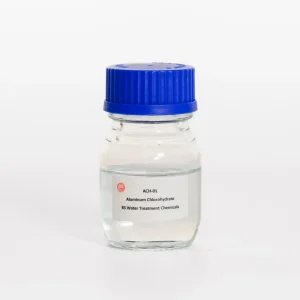
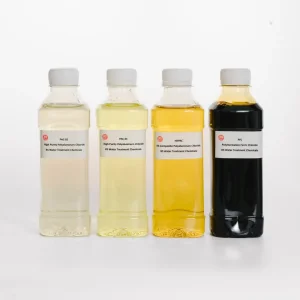
Aluminium sulphate ($Al_2(SO_4)_3$) remains the cornerstone of global coagulation technology. As municipal and industrial water treatment standards tighten globally under regulations such as the European Union Drinking Water Directive and US EPA Stage 2 Disinfectants and Disinfection Byproducts Rules, the demand for high-basicity and high-purity coagulants has escalated. Traditional aluminium sulphate, while highly cost-effective, faces challenges in cold-water situations and when treating highly turbid water due to slower floc formulation rates.
At Wuxi BS Water Treatment Chemicals Co., Ltd., we bridge this technological gap. By utilizing state-of-the-art synthesis pathways, our manufacturing facilities produce premium solid and liquid aluminium sulphate variants alongside customized polymeric alternatives. These formulations accelerate particle destabilization, reduce chemical sludge footprints, and strictly limit residual dissolved aluminium levels in treated water to below 0.1 mg/L.
"Coagulation is not merely about settling particles; it is about optimizing molecular kinetics to target dissolved organic carbon (DOC) and micro-pollutants without altering downstream pH stability."
2. Technical Roadmap & Future Outlook
The evolution of coagulants is shifting from conventional salts toward tailored inorganic polymers and hybrid metal-organic complexes. Wuxi BS is leading this technological paradigm shift through four dedicated research fronts:
Speciation Optimization
Enhancing the concentration of stable $Al_{13}$ and $Al_{30}$ polycations to maximize charge neutralization efficiency in low-temperature waters.
Hybrid Formulations
Blending aluminium sulphate with high-molecular-weight cationic polymers like PDADMAC to eliminate the need for separate flocculant dosing.
Zero-Sludge Innovations
Developing inorganic coagulant formulations that reduce wet sludge mass by up to 30%, lowering disposal costs for municipal treatment facilities.
Looking to the future, our R&D efforts focus on Smart Dosing Systems. By utilizing digital streaming current detectors (SCD) and real-time feedforward algorithms, municipal treatment plants can adjust coagulant dosages in response to incoming water turbidity. This prevents over-dosing, avoids high residual metal carryover, and keeps chemical consumption optimized.
3. Macro-Industrial Solutions Across Key Sectors
Water chemistry must adapt to the specific industrial application at hand. Wuxi BS supplies customized products for several key sectors:
Municipal Drinking Water: Minimizes turbidity, eliminates color, and complies with strict standards for trace heavy metals (arsenic, lead, and cadmium).
Pulp & Paper Production: Used as an acidic sizing agent and retention aid. It controls pitch and helps bind sizing materials to wood fibers.
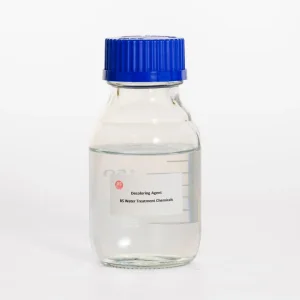
Textile & Dye Wastewater: In combination with our Decoloring Agent, it breaks down emulsified dyes, separating high-chemical oxygen demand (COD) complexes from the effluent.
Petroleum & Petrochemical Processing: Breaks down oil-in-water emulsions, allowing for cleaner separation before discharge or deep well injection.
4. China Factory 4.0: Supply Chain Resilience & Quality Control
Operating out of our Wuxi chemical park, Wuxi BS Water Treatment Chemicals Co., Ltd. implements Factory 4.0 manufacturing processes. This infrastructure delivers distinct advantages for global procurement partners:
Feature
Wuxi BS Factory Standard
Industrial Impact
Production Volume
Over 500,000 Tons Annually
Guarantees supply during raw material shortages.
Storage Capacity
20,000+ Tons Finished Warehousing
Supports rapid dispatch within 7-14 days.
Logistics Infrastructure
Proximity to Shanghai & Ningbo Ports
Reduces transport costs and shipping transit times.
Traceability
Batch-specific ICP-MS analysis
Ensures high purity and consistent performance.
Our raw material sourcing is vertically integrated. We process high-purity bauxite and control the sulfuric acid synthesis loop directly. This insulation from raw material price volatility allows us to provide stable pricing agreements to our long-term contract partners.
5. Global Sourcing, Compliance, & Certification
Overseas procurement demands compliance with local environmental and chemical handling frameworks. Every shipment of Wuxi BS chemicals is accompanied by comprehensive documentation:
NSF/ANSI Standard 60 Certification: Evaluated and certified for drinking water treatment chemicals.
REACH Compliance: Fully registered for import into European Union member states.
ISO 9001 & ISO 14001: Standardized quality systems and environmental management policies.
UN-Rated Packaging: Available in 25kg, 50kg, 1000kg IBC totes, and bulk liquid tankers. All packaging meets international maritime transport standards.
6. Frequently Asked Questions (FAQ)
What is the difference between Aluminium Sulphate and Polyaluminium Chloride (PAC)?
+
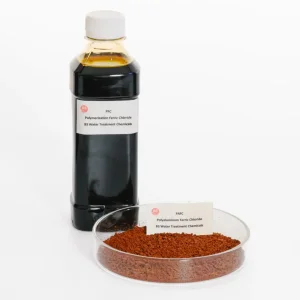
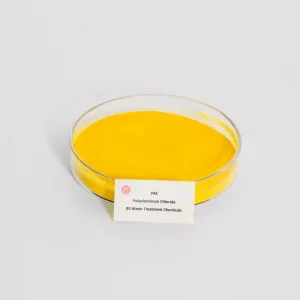
Aluminium Sulphate is a simple monomeric metal salt that is highly effective and economical in waters with moderate to high alkalinity. Polyaluminium Chloride (PAC) is a pre-hydrolyzed polymeric coagulant. PAC typically works over a wider pH range, forms flocs faster at low temperatures, and produces less chemical sludge than conventional alum.
How does Wuxi BS prevent heavy metal contamination in its products?
+
We source clean raw materials and use a multi-stage filtration process in our production. Every batch undergoes ICP-MS analysis to check trace levels of Arsenic (As), Lead (Pb), and Cadmium (Cd). This quality control ensures compliance with international drinking water treatment standards.
What is the shelf life of solid vs. liquid Aluminium Sulphate?
+
Solid Aluminium Sulphate, when kept in dry, cool conditions in unopened bags, has an indefinite shelf life. Liquid formulations should ideally be used within 6 to 12 months. This timing prevents crystallization issues during cold weather and avoids gradual concentration changes from evaporation.
How can I request a sample for jar testing?
+
You can contact our sales department through the contact form below or email us directly at [email protected]. We supply 500g and 1kg samples along with a Certificate of Analysis (COA) to help you run jar tests at your facility.
 BS Water