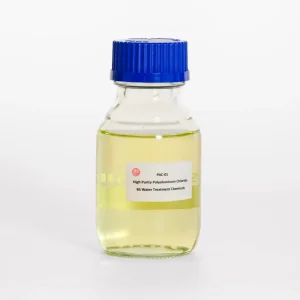
Water Decoloring Agent Supplier & Factory in Hamburg

Advanced Polymeric Solutions Tailored for Hamburg’s Heavy Chemical, Paper Mill, and Industrial Wastewater Effluents

Send Inquiry Now

Engineered Coagulants for Northern Germany Operations

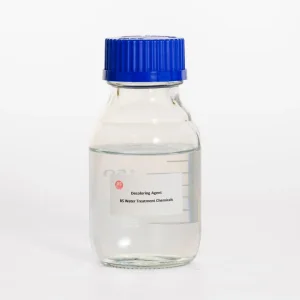
High-purity cationic formulation arrays optimized for rapid color removal, suspended solids sedimentation, and sludge volume minimization.

Request Instant Technical TDS & SDS Sheets

Hamburg's Industrial Effluent Challenges & High-Performance Water Decoloring Agents

As Northern Europe's leading logistics hub and the location of Germany’s second largest port, Hamburg supports a heavy industrial zone that relies heavily on strict environmental compliance. The industrial wastewater generated in the metropolitan area must satisfy stringent local and national clean-water standards. In industrial applications such as printing ink production, papermaking, textile processing, and chemical synthesis, water decoloration remains a complex challenge. High-performance cationic polymers—specifically dicyandiamide formaldehyde-based Water Decoloring Agents (WDA)—play a critical role in treating these wastewater streams.

The Chemical Removal Mechanism: Cationic polymers carry a high positive charge density. Highly colored effluent contains dissolved, organic anionic dyes (such as acid, reactive, or direct dyes). The dicyandiamide formaldehyde resin provides rapid charge neutralization, destabilizing the anionic dye structures. This forms insoluble floccules that are easily removed through sedimentation or dissolved air flotation (DAF), dropping wastewater color values to regulatory baselines.

Hamburg’s Local Industrial Context

The chemical parks and manufacturing plants surrounding the Elbe River and Hamburg Port operate under the strict supervision of the Hamburg Senate for Environment and Energy (BUEA) and comply with the European Union Water Framework Directive (WFD). The Port of Hamburg’s proximity to residential and marine ecosystems means local factories cannot discharge untreated, colored wastewater. Colored discharges block light penetration, reducing dissolved oxygen levels and disrupting aquatic flora and fauna. By using advanced cationic polymers, operators in areas like Billbrook-Rothenburgsort can remove dye residues, protect municipal treatment plants, and keep their wastewater parameters well within regulatory limits.

Decolorization vs. Coagulation: Choosing the Right Agent

Many procurement teams mistake standard coagulants like Polyaluminum Chloride (PAC) or Polyacrylamide (PAM) as complete solutions for high-concentration dye wastewater. While PAC is an effective primary coagulant for general suspended solids, it cannot break down complex organic dye molecules. WDAs target these dissolved color groups directly, ensuring low turbidity and reducing organic loading in a single, efficient process step.
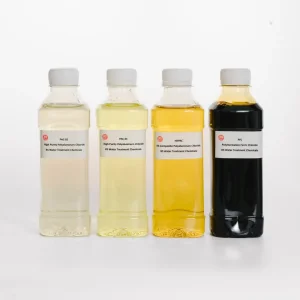
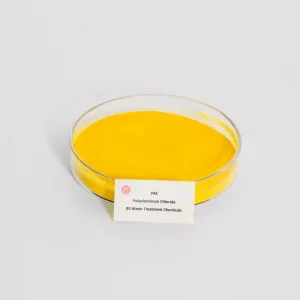
Global Manufacturing Strength

About Wuxi BS Water Treatment Chemicals

Established in 1998, Wuxi BS Water Treatment Chemicals Co., Ltd. (formerly Wuxi Bisheng) delivers advanced chemical manufacturing to municipal plants and heavy industrial facilities globally. Leveraging automated production facilities and quality control processes, we ensure a reliable supply of water treatment products for municipal water and industrial wastewater treatment.

27+
Years Industry Experience
500k+
Annual Sales (Tons)
20k+
Warehouse Storage Capacity (Tons)
1000+
Global Enterprises Served
Partner With Us Today

China Industry 4.0: Supply Chain Resilience and Efficiency Advantages

Integrating smart manufacturing systems with global logistics networks to deliver cost-effective chemical supply lines to European ports.

Key Logistics Hubs:

  • Direct shipping from East China ports to Hamburg Hafen.
  • Integrated ISO tank containers and bulk flexitanks.
  • Real-time chemical purity and consistency tracking.
  • Custom customs-clearance documentation protocols.

In modern industrial procurement, supply chain resilience is as critical as chemical formulation. China’s chemical manufacturing infrastructure has transitioned to Industry 4.0, integrating digital automated control networks. At Wuxi BS Water Treatment, our production facilities run on digital DCS control frameworks that monitor polymerization temperature, reactant flow, and molecular weight distribution. This level of process control ensures consistent dicyandiamide formaldehyde resin viscosity, preventing formulation drift and dosing issues for European treatment operations.

Our strategic logistics framework connects our production center directly to major shipping lines, simplifying delivery to the Port of Hamburg. With a steady inventory of finished products exceeding 20,000 tons, we can absorb international market shocks and seasonal demand spikes, keeping our global clients supplied with minimal lead time. Hamburg-based procurement teams can confidently transition to just-in-time chemical delivery plans without risking production downtime.

Customization via OEM & ODM Services

Every wastewater stream has a unique chemical fingerprint. Our technical team offers comprehensive analytical and customization services, adjusting charge density, viscosity, and active solid content (10%-15% liquid versions, up to high-purity solids) to target your facility's specific dye composition and COD levels.

Custom Formulation & OEM/ODM Manufacturing

Providing technical support throughout the entire water-treatment lifecycle, from jar testing to full-scale dosing optimization.

Technical Team

Our experienced chemical engineers provide customized wastewater analysis and recipe adjustments to match your plant's organic loading profiles.

Stable Capacity

With an annual sales volume exceeding 500,000 tons and extensive onsite warehousing, we can comfortably support high-volume regional supply contracts.

Worry-Free Supply

Smart, automated dosing equipment and comprehensive ISO-certified QC testing minimize batch-to-batch variation and packaging anomalies.

Hamburg Regional Industrial Application Profiles

Tailoring chemical treatment steps to target specific effluent challenges across local industrial sectors.

Municipal & Industrial

Sewage & Color Removal

Pre-treatment systems at local municipal wastewater plants use cationic dicyandiamide resins to precipitate organic colors, preventing downstream bio-system overload.

Elbe Logistics & Refinery

Petroleum & Petrochemical

Decolorization and demulsification of oil-water emulsions at refineries and logistics terminals, ensuring clean discharge into local river systems.

Membrane Protection

Membrane Process Pretreatment

Removing colloidal organic matter and large suspended polymers prior to Ultrafiltration (UF) and Reverse Osmosis (RO) systems, reducing membrane fouling.

Packaging & Pulp

Paper & Pulping Operations

Capturing fine fibers, pigments, and organic fillers in paper-mill process loops. This improves machine performance and speeds up closed-loop water reuse.

Municipal Drinking Supply

Drinking Water Treatment

Applying premium high-purity coagulants like PAC-01 to remove natural organic matter (NOM) and humic acids from surface water reservoirs prior to filtration.

A History of Innovation and Growth

Over two decades of expansion and process improvement in international water treatment chemistry.

1998

The factory was established, focusing on basic coagulants for local municipal treatment projects.

2005

Renamed Wuxi Bisheng Water Treatment Agent Co., Ltd., expanding production into advanced polymeric decolorization agents.

2007

Began exporting water treatment products globally, meeting international quality and supply chain standards.

2021

Annual export sales exceeded $10,000,000, driven by growing demand for eco-friendly flocculants in Europe and Asia.

2025

Established our dedicated foreign trade department to provide direct service, technical support, and logistics coordination to international clients.

Technical Q&A: Water Decolorization Solutions

Addressing common engineering, dosage, and regulatory questions from procurement managers and plant operators.

What is the optimal pH range for Water Decoloring Agent performance?
Our cationic polymers operate efficiently across a broad pH spectrum of 6.0 to 10.0. However, for wastewater containing acidic or reactive dyes, maintaining a pH of 7.0 to 8.5 typically delivers the fastest flocculation speed and optimal color removal efficiency. Adjusting the pH beforehand is recommended to minimize polymer dosage requirements.
How does dicyandiamide formaldehyde resin impact wastewater COD?
By precipitating dissolved organic colorants and suspended particles into solid flocs, our Water Decoloring Agent often reduces overall Chemical Oxygen Demand (COD) by 30% to 60%. For comprehensive COD removal, we recommend using WDA in combination with Polyaluminum Chloride (PAC) or an aerobic biological treatment step.
Can the product be safely used alongside Polyaluminum Chloride (PAC)?
Yes. A dual-dosing regimen is highly effective. Dosing WDA first neutralizes and precipitates dissolved dyes, and then adding PAC helps bind the resulting micro-flocs into larger, stable macro-flocs. This synergistic approach reduces total chemical costs and yields clearer effluent.
What packaging and shipping options are available for Germany deliveries?
We export liquid polymers in 30kg, 250kg, and 1250kg IBC tanks, or via bulk Flexitanks for larger industrial orders. Solid formulations are shipped in 25kg multi-wall bags on wrapped pallets. All packaging is labeled in compliance with European REACH and CLP regulations.

Optimize Your Decolorization Process Today

Get in touch with our technical sales team to request free product samples, receive pricing for your application, or schedule a bench-scale jar test analysis.

Send Inquiry Now Contact Tech Support